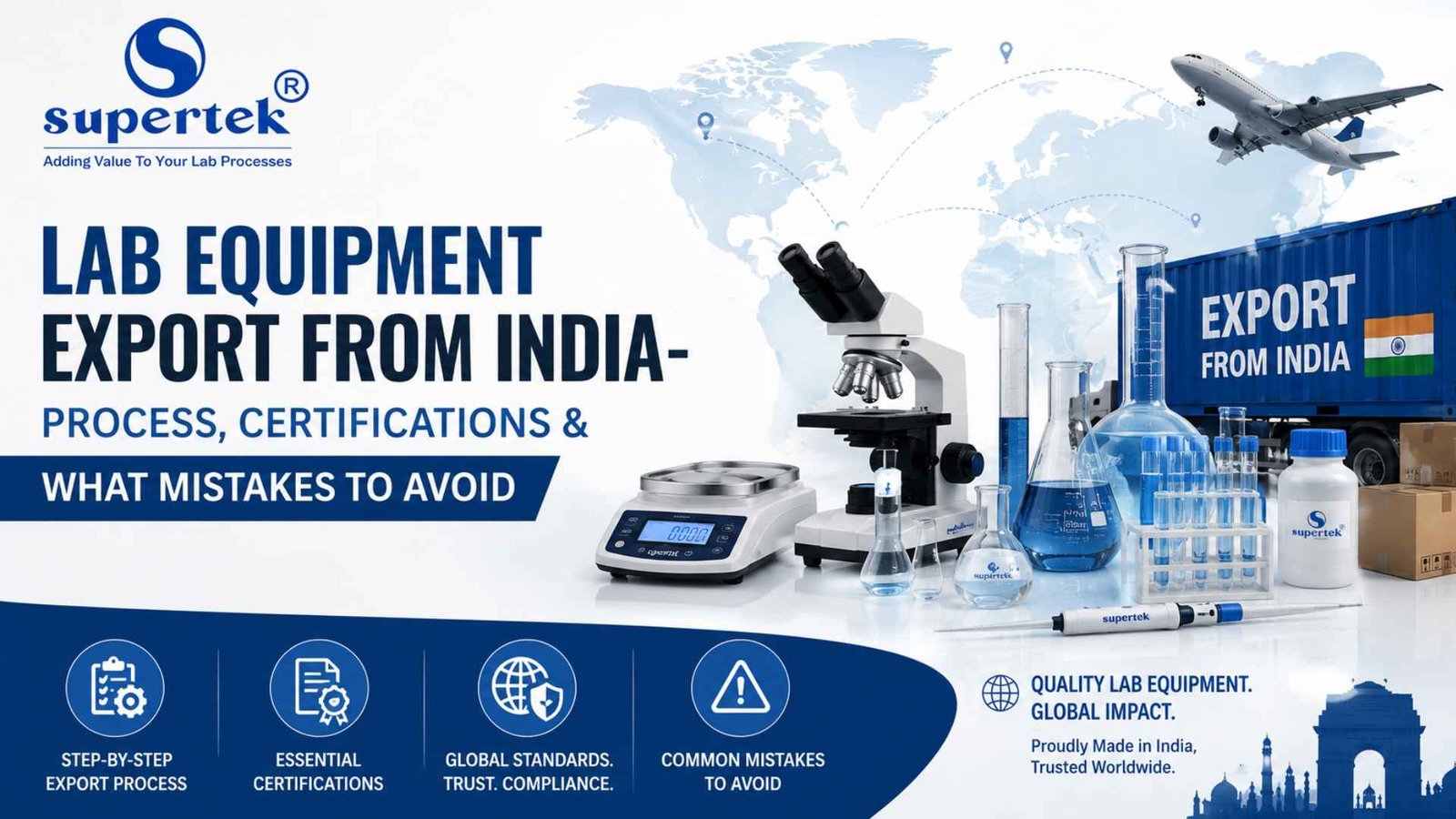
India has become one of the fastest-growing exporters of laboratory equipment, supplying high-quality scientific instruments to customers across Asia, Africa, Europe, the Middle East, and North America. From educational institutions and research laboratories to pharmaceutical companies, hospitals, and industrial testing facilities, the demand for Indian-made lab equipment continues to grow because of its quality, affordability, and compliance with international standards.
However, exporting laboratory equipment involves much more than manufacturing and shipping products. It requires careful planning, adherence to export regulations, proper documentation, internationally recognised certifications, and secure packaging. Even a small mistake can lead to shipment delays, customs issues, or dissatisfied customers.
We have extensive experience in manufacturing and supplying laboratory equipment of more than 8 decades to domestic and international markets.
In this guide, we explain the complete export process, the commonly required certifications, and the mistakes every exporter should avoid to ensure smooth global deliveries.
Why India is a Leading Exporter of Laboratory Equipment
India has established itself as a trusted manufacturing destination due to its advanced production capabilities, skilled workforce, and competitive pricing. Laboratory equipment manufactured in India is widely used in scientific research, pharmaceutical manufacturing, healthcare, food testing, environmental monitoring, and industrial quality control.
Some of the key reasons international buyers choose Indian manufacturers include:
- Cost-effective manufacturing without compromising quality
- Availability of a wide range of laboratory instruments
- Compliance with international quality standards
- Strong engineering and customization capabilities
- Reliable export infrastructure and global logistics support
As global industries continue to invest in research and development, the demand for dependable laboratory equipment from trusted Indian manufacturers continues to rise.
Step-by-Step Process for Exporting Laboratory Equipment
1. Understanding Customer Requirements
The first step in any successful export is understanding the buyer’s exact requirements. Laboratory equipment varies depending on industry applications, testing methods, and country-specific regulations.
Before production begins, manufacturers should confirm:
- Technical specifications
- Equipment dimensions
- Voltage and frequency requirements
- Material specifications
- Performance parameters
- Accessories and spare parts
- Warranty terms
Clear communication at this stage helps avoid misunderstandings later.
2. Manufacturing and Quality Inspection
Once specifications are finalised, the equipment is manufactured using quality-controlled processes. Every product should undergo rigorous testing before dispatch to ensure accuracy, durability, and performance.
Typical inspections include:
- Functional testing
- Calibration verification
- Electrical safety checks
- Temperature or performance testing (where applicable)
- Final visual inspection
Quality assurance is essential because laboratory equipment is expected to deliver precise and reliable results.
3. Export Documentation
Proper documentation is one of the most critical aspects of international trade. Missing or incorrect paperwork can delay customs clearance and increase shipping costs.
Common export documents include:
- Commercial Invoice
- Packing List
- Bill of Lading or Airway Bill
- Certificate of Origin
- Export Declaration
- Insurance Certificate
- Product Test Reports
- Warranty Documents
Maintaining complete and accurate documentation ensures smoother customs processing.
4. Packaging and Shipping
Laboratory instruments are often delicate and require export-grade packaging to protect them during transit.
Manufacturers generally use:
- Shock-resistant foam
- Wooden export crates
- Moisture-resistant packaging
- Protective wrapping
- Fragile labels
Proper packaging minimises the risk of damage during transportation and helps preserve product performance.
5. Customs Clearance and Delivery
After packaging, the shipment undergoes customs clearance before being dispatched to the destination country. Working with experienced freight forwarders and logistics partners helps ensure timely delivery and compliance with international shipping regulations.
Important Certifications for Laboratory Equipment Exports
Depending on the destination country and product category, exporters may need specific certifications to demonstrate quality and compliance.
ISO 9001 Certification
ISO 9001 confirms that the manufacturer follows a recognized Quality Management System (QMS). Many international buyers prefer suppliers with ISO certification because it reflects a commitment to consistent product quality.
CE Marking
For exports to many European countries, CE marking indicates that products meet applicable safety, health, and environmental requirements.
RoHS Compliance
Certain electrical and electronic laboratory instruments may need RoHS compliance, which restricts the use of hazardous substances in manufacturing.
Calibration Certificates
Many scientific instruments require calibration certificates to verify measurement accuracy and ensure traceability to recognized standards.
Product Testing Reports
Independent testing reports help international buyers verify product performance and compliance with required specifications.
Common Mistakes to Avoid While Exporting Lab Equipment
Ignoring Country-Specific Regulations
Each country has different import requirements. Assuming that one set of standards applies everywhere can result in customs delays or rejected shipments.
Always verify local regulations before exporting.
Incomplete Documentation
Missing certificates, incorrect invoices, or inaccurate packing lists are among the most common reasons for customs clearance delays.
Double-check every document before shipment.
Poor Packaging
Laboratory equipment is often sensitive to vibration, moisture, and impact. Using inadequate packaging can lead to damaged products and costly replacements.
Investing in quality packaging protects both the equipment and your reputation.
Skipping Product Testing
Exporting equipment without proper testing increases the risk of performance issues after delivery.
Every instrument should undergo inspection and calibration before dispatch.
Incorrect Product Classification
Using an incorrect HS Code may lead to customs complications or incorrect duty calculations.
Ensure products are classified accurately before export.
Ignoring Electrical Standards
Different countries use different voltage and frequency standards. Equipment should be configured according to the destination country’s electrical requirements.
Lack of After-Sales Support
International buyers appreciate suppliers who provide installation guidance, user manuals, spare parts, and technical assistance. Strong after-sales support builds trust and encourages repeat business.
Why Choose Supertek Scientific Instruments?
We are one of the leading manufacturers and exporters, committed to delivering high-quality laboratory equipment that meets international expectations for performance, safety, and reliability. Our manufacturing processes emphasize precision engineering, rigorous quality control, and customer satisfaction.
We offer a comprehensive range of laboratory equipment for educational institutions, pharmaceutical companies, healthcare facilities, research organizations, and industrial laboratories. Every product is carefully tested before dispatch and supported by proper documentation, export-ready packaging, and responsive technical assistance.
Our team also understands the complexities of international trade and works closely with customers to ensure smooth export procedures, timely deliveries, and compliance with destination-country requirements.
Conclusion
Exporting laboratory equipment from India presents excellent opportunities for manufacturers and global buyers alike. Success depends on understanding customer requirements, maintaining strict quality standards, preparing accurate documentation, obtaining the necessary certifications, and avoiding common export mistakes.
Choosing an experienced export partner can simplify this process and reduce the risks associated with international trade. With years of manufacturing expertise and a strong focus on quality, Supertek is dedicated to supplying reliable laboratory equipment to customers worldwide. Whether you need standard scientific instruments or customized laboratory solutions, our team is ready to deliver products that meet global quality standards and support your research and testing needs.

Supertek has earned a reputation as one of the most trusted manufacturers of Educational Teaching Aids, Laboratory Glassware, and Laboratory Essentials. As an ISO 9001:2015 certified organization, we are committed to maintaining the highest standards of quality and reliability. Supertek has grown into a leading exporter from India, serving customers in more than 80 countries across the globe.

 +1 (630) 345-3450