
Benchtop
-
Hot Plates
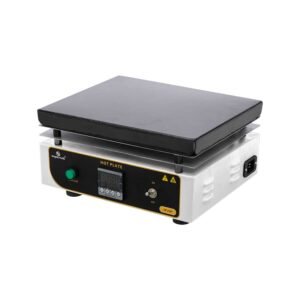
Laboratory Hot Plate, Rectangular SS, Digital
supertek’ s laboratory hot plate is a reliable heating equipment designed for a wide range of laboratory applications. This instrument provides a durable and uniform heating
platform, making it excellent for a variety of processes such as sample preparation, chemical reactions, material testing, etc. These rectangular hot plates with large surface area
can be used for heating multiple solutions simultaneously.Features:
- Durable Stainless-Steel top provides excellent resistance to corrosion and chemical spills, ensuring longevity and easy cleaning.
- Large heating surface with uniform heating
- Precise temperature control with PID controller
- LED display for showing actual and set temperature
- Measure and control the temperature of the solution directly
- Temperature probe PT100
- Includes support rods and clamps
- With non-slip rubber feet
Technical Specifications:
- Temperature range: Ambient + 5°C to 350°C
- Temperature accuracy ± 1°C, Resolution 1°C
- Input voltage: 220 V AC ± 10%, 50/60 Hz
- MOC Top Plate: Ceramic Coated stainless steel
- MOC Body: Powder-coated mild steel
- Overload protection
- CE certified
CH11170DC
HPRT-D -
Kjeldahl Unit
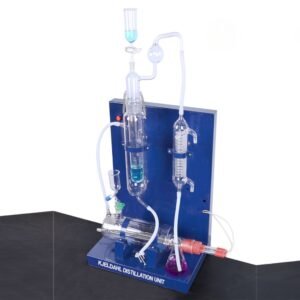
Kjeldahl Distillation Unit
A Kjeldahl distillation unit is a laboratory apparatus for determining nitrogen content in organic compounds. This is recognized as the precise and dependable method in various industries, including food, agriculture, and environmental science.
Operations:
1. Check the distilled water level in the steam generator (11).
2. Start the cooling water circulation in the condenser (3).
3. Dilute the digested sample with distilled water (10 – 20 ml) and load it into the inner glass tube
(8) through the dropping funnel (1).
4. Place 25 ml of boric acid solution with the indicator in a 250 ml conical flask at the receiver end
(7).
5. Take 40 ml of 40% alkali and keep it ready in the dropping funnel (1) with the stopcock closed.
6. Check to ascertain that all the rubber tubing is tightly fitted.
7. Now start the steam generator by switching the heater on.
8. The steam generator will now generate steam which passes through the outer jacket tube (9)
and then bubbles into the inner tube (8) which holds the sample.
9. When the steam bubbles vigorously with the digested sample add 40 ml of alkali “immediately”
and close the stop cock.
10. Now the digested sample in the inner tube (8) turns dark brown.
11. Continue the steam distillation until liquid ammonia collects in the boric acid solution. There will
be color changes based on the indicator used. Usually, it will be red
to green. Collect 100 – 120 ml distillate in the conical flask.
12. Switch off the heater and then remove the conical flask and titrate the solution using a burette.
13. Now stop the cooling water circulation in the condenser.
14. Once the heater is switched off, the digested sample automatically gets siphoned into the outer
jacket (9) through the siphoning tube (8).
15. Add distilled water once or twice to rinse and remove the spent reagent which might be present
in the inner tube.
16. The spent reagents which are collected in the outer jacket tube (9) can later be removed by
opening the pinch cock and the next experiment can be started. Normally it takes 5 to 7
minutes for distillation of one sample.KJDU -
Magnetic Stirrer
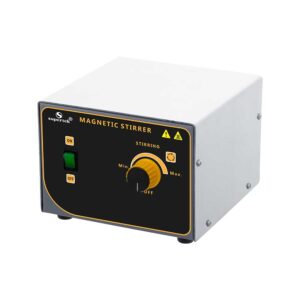
Magnetic Stirrer
Stirrers are used in laboratory to mix liquid solutions and thereby speed up the reactions.
Features:
- Stainless steel top surface
- Continuously variable stirring speed
- Spill proof design
- Includes teflon coated stirring bar
Technical Specifications:
- Maximum capacity: Upto 2 L
- Stirring Speed: Upto 1500 RPM
- Input voltage: 220 V AC ± 10%, 50-60 Hz
- CE certified
CH12393
MS2 -
Water Distilation
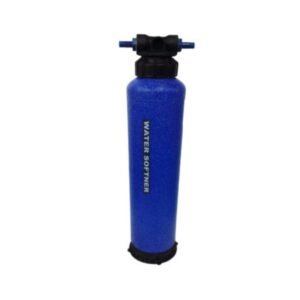
Water Softener
The newly designed water softener works on the ion exchange principle. It is used along with Quartz and Glass distillation units. The water softener prevents the accumulation of sludge inside the units (i.e. deposits of Calcium and Magnesium salts) which renders hardness to water.
Features:
- Compatible with quartz and glass distillation units
- Non-electric operation for hassle-free usage
- Easy to install and maintain
- Robust and durable construction
WSOFT-01

 +1 (630) 345-3450